“Twelve Things Worth Continuing From Chuck Norris: Trauma, Sea, and the Hidden Resources Behind the Jokes”
“Twelve Things Worth Continuing From Chuck Norris: Trauma, Sea, and the Hidden Resources Behind the Jokes”
When the internet jokes that Chuck Norris counted to infinity – twice – it’s easy to forget that behind the meme there is a very human story of fear, war, loss and slow, disciplined repair.For years, “Chuck Norris Facts” have painted him as invincible: he doesn’t do push‑ups, he pushes the earth down; the Boogeyman checks under his bed. Those jokes became global folklore. And yet, if you strip away the hyperbole, you find something surprisingly relevant to anyone living with trauma, especially here in Israel, between sea and shore, between October 7th and the long, messy work of rebuilding.This article is not about worshiping Chuck Norris. It’s about asking: what resources did he actually build, coming from a very wounded background – and which of those twelve resources might be worth continuing in ourselves, our surfers, our families and our communities
1. Remember that even “legends” start fragile
Chuck Norris was not born a meme. He was born Carlos Ray in rural Oklahoma in 1940, after a complicated birth where he literally struggled to breathe. He grew up poor, moving from place to place, describing himself as shy, non‑athletic and deeply insecure.For trauma work, this matters. Resilience is not about having a perfect start. it’s tempting to assume strength was always there. Chuck’s story reminds us: there is almost always a vulnerable beginning under the armor.
2. Name inter generational trauma – not just “difficult parents”
Chuck’s father, Ray Norris, served as an infantryman in Company K, 39th Infantry Regiment, 9th Infantry Division, from June 1944 to May 1945 – front line service in Western Europe’s worst months. That regiment fought through the aftermath of D‑Day in Normandy, the hedgerows and towns of northern France, into Belgium, and into the infamous Hürtgen Forest before crossing the Rhine into Germany.Historians describe the Hürtgen campaign as weeks and months of cold, mud, artillery and tree‑burst shells, with heavy casualties and thousands of “non‑battle casualties”: men pulled off the line with what we would now call acute combat stress reactions. We don’t have Ray’s medical record. We do have his son’s description: a father who drank heavily, swung between kindness and terror, and made home unpredictable and frightening.We cannot diagnose him retroactively. But it is responsible and honest to say: his behavior fits a pattern we now recognize as “possible untreated PTSD plus alcohol as self‑medication”. When we acknowledge that, we shift the frame from “my father was just bad” to “my father was also injured”. That doesn’t excuse harm. It does widen the conversation in families about how war and trauma do not end when the shooting stops.
3. Use “negative role models” as a compass
One of Chuck’s defining moments came as a teenager, when his biological father arrived drunk and threatened his much smaller stepfather. Chuck stood in front of him with a hammer in his hand and made it clear the old pattern would not continue. He didn’t attack; he simply did not move.Out of that moment grew a decision: “I will not be the man my father became.” In psychological terms, that is a negative role model: choosing to grow in the opposite direction from a parent’s damaged behavior..
4. Let precision sports repair your relationship with your body
In 1958, Norris enlisted in the U.S. Air Force as an Air Policeman and was stationed at Osan Air Base in South Korea. There he discovered Tang Soo Do and, later, Tae Kwon Do. He has said that as a child he was clumsy and uncoordinated. Through martial arts he slowly rebuilt his entire sense of himself.Over the 1960s he became a world‑class competitor: multiple karate championships and, eventually, the first Westerner to earn an 8th‑degree black belt in Tae Kwon Do. But when he talks about it, the language is not “I learned to beat people up”. It’s more like:
- I learned to focus.
- I learned discipline.
- I gained inner security – so I didn’t need to start fights.
This is precisely what body‑based trauma therapists talk about: using structured movement, breath, rhythm and progressive challenge to help the nervous system move from hyper vigilance or collapse into grounded presence. Martial arts, like surfing, are demanding and humbling. Done with the right intention, they are also deeply regulating. here - At yamyabasha.com we see something similar when a surfer learns, slowly, to read a wave, to place their feet more accurately, to pop up with just a bit more control. It is not only technique. It is the experience: “my body can learn; I can trust it again.”
5. Allow healthy ambition to build self‑efficacy, not just ego
Competitive sport has a bad reputation in some therapeutic circles, especially when it becomes all about comparison and shame. Norris’s career shows another possibility. He pushed himself to the highest levels of competitive karate – not to prove he was better than everyone, but to test and build what psychologists call self‑efficacy: a felt sense of “I can overcome obstacles; I can persist; I can improve.”For trauma survivors who often feel powerless, healthy, bounded ambition can be medicine. Setting a realistic but challenging goal – whether it’s standing up on a board, paddling out to the back line, or simply attending group every week – and reaching it changes the inner story from “I fail” to “I can.”The key is how we define “winning”. In Norris’s language, the real victory is not on the scoreboard. It’s in the character you develop through disciplined training.
6. Choose controlled danger instead of chaotic reenactment
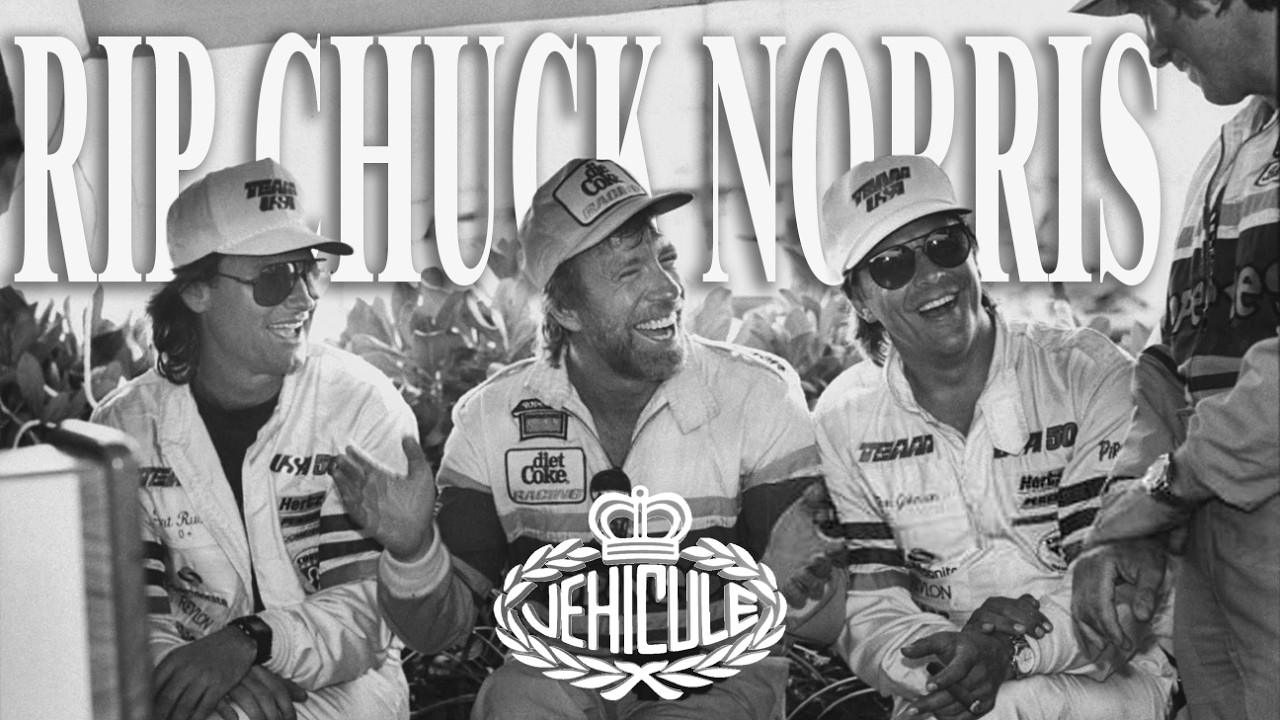
In the late 1980s and early 1990s, Norris joined offshore powerboat racing. High‑speed boats, long distances, rough water, real risk. It would be easy to call this reckless. But the way he describes it emphasizes planning, teamwork and extreme focus. Danger is present, but contained: safety gear, tested hulls, clear roles, navigational plans.Trauma often pulls people toward two extremes: total avoidance (“I will never feel fear again”) or compulsive reenactment (throwing themselves into unsafe situations that echo the original trauma). Norris’s pattern is closer to a third path: deliberately entering intense environments with as much preparation and consent as possible.Surf‑therapy sits in a similar space. The ocean is never completely safe. But we can choose conditions, equipment, ratios, protocols. We invite participants to renegotiate fear and power in a setting where risk is honest but not random. That’s a very different message to the nervous system than the chaos of war or abuse.
7. Honor family as a mixed, living resource
Norris does not hide his family’s pain: an alcoholic father, the death of his younger brother Wieland in Vietnam, strains in his first marriage. At the same time, he speaks with deep warmth about his mother Wilma, whom he called “the most spiritual person I know”, and about his wife Gina and their children. When Gina became seriously ill after a reaction to medical contrast agents, he effectively stepped away from Hollywood to care for her full‑time.Trauma work sometimes swings between two poles: idealizing family as perfect, or defining it only as the source of harm. His life suggests a more honest middle: family as both wound and resource. The art is to see who in the family system can be leaned on, who needs more distance, and how we ourselves want to “upgrade” the legacy we pass on.For many Israeli surfers and veterans, the beach is where complicated family stories loosen slightly. Bringing that awareness into group conversations – “who in my family hurts me, who strengthens me, and who do I choose to be?” – is part of the deeper work.
8. Let faith and values be a spine, not a bypass
Chuck Norris’s Christian faith is not a secret. He has written and spoken about his relationship with Jesus, about prayer, about seeing his career as a calling. From a therapeutic perspective, the important question is: does this faith deepen or deny his contact with pain?Looking at his actions – staying with his sick wife, advocating for veterans, publicly mourning losses – it seems clear his spirituality is not used as “everything is fine, God wanted this”. Rather, it provides a spine: a sense of purpose, a community, a moral orientation. This is very much aligned with research on post‑traumatic growth, which highlights meaning‑making and spiritual change as key domains where growth can occur after trauma.In Israel, spiritual language can be Jewish, traditional, secular‑existential, or connected to nature and the sea itself. The form matters less than the function: any belief system that supports compassion, responsibility and hope can be a powerful resilience factor. The danger is when beliefs are used to shame (“you should be stronger”) instead of to hold.
9. Use humor and myth as flexible tools
The Chuck Norris jokes could have been experienced as humiliating. Instead, he chose to laugh with them, even co‑authoring a book about the best ones. He acknowledged that of course he is not invincible – and that he appreciates people finding joy in the exaggerated myth.In military and emergency cultures, dark humor is a classic coping strategy. It doesn’t solve trauma, but it can make unbearable realities more discussable. Similarly, myth – “the unstoppable fighter”, “the surfer who never misses a wave” – can be used either as an oppressive standard or as a playful metaphor.The healthy move is to keep myth and humor flexible. If we can tell a “Chuck Norris Fact” about our own anxiety – “my panic is so strong it can flatten a set at Jaffa” – and then smile together, we create space around it. The symptom is no longer the whole truth; it becomes one character in a larger, more humorous story.
10. Turn grief into service
When Wieland Norris was killed in Vietnam in 1970, it could have shattered Chuck into bitterness or detachment. Instead, along with grief, it seems to have deepened his commitment to other soldiers. The “Missing in Action” films, dedicated to his brother, are one expression. Less theatrical are the many visits he made to American troops in Iraq, Afghanistan and at home, and his ongoing advocacy around PTSD and veteran suicide.Service is not a magical cure. Sometimes people use helping others to avoid their own pain. But when chosen consciously, it can be a key strand of post‑traumatic growth: connecting one’s wounds to others in a way that reduces loneliness and increases meaning.In Israeli surf‑therapy contexts, we see this when veterans start mentoring newer participants, or when bereaved parents create projects in memory of their children. It doesn’t erase loss, but it stops loss from being meaningless.
11. Stand with other traumatised communities: his bond with Israel and the Bibas family
Norris’s connection to Israel was not only cinematic. He visited the country, met with leaders, expressed political and moral support, and was widely described as a “friend of Israel”. After Hamas’s 7 October 2023 attack, he joined a chorus of voices condemning the massacre and supporting Israel’s right to defend itself.More personally, on October 31st 2023 his official Facebook page highlighted four‑year‑old Ariel Bibas, abducted from Nir Oz with his baby brother and parents, calling explicitly for his release and using the hashtag #ReleaseTheHostagesNow. For Israelis, seeing Ariel’s photo on Chuck Norris’s page was surreal: the global myth of toughness pointing directly at one ginger‑haired child and saying, in effect, “this matters”.Beyond politics, this reflects a consistent pattern: a man whose family was marked by war and loss recognising those patterns in others and choosing solidarity. For a trauma‑sensitive community, this is a reminder that our story is not isolated. Our waves of pain and healing are connected to those of other peoples and places.
12. Accept “good‑enough healing” – and keep building
Finally, it’s important to notice what we don’t know. We don’t have a record of Chuck Norris doing long‑term psychotherapy or carrying a PTSD diagnosis. We do know he came from a wounded family, lost a brother, faced his own crises, and still chose, again and again, to invest in training, faith, family and service.That doesn’t mean therapy is unnecessary. On the contrary: many people absolutely need and deserve professional help. It does mean that a meaningful, growth‑filled life is possible even if some wounds never fully close, as long as we keep cultivating resources – in the body, in the sea, in relationships, in humor, in values.
Chuck Norris: not the fantasy of a man who never feels fear, but the reality of a man who started fragile, grew up in the shadow of war and loss, and still chose to build an architecture of resilience around himself and others.Not everyone will become a world‑class martial artist or race powerboats. But everyone can:
- take one step toward trusting their body again
- show up for someone else’s pain
- find a practice (surfing, prayer, movement, breath) that anchors them
- and, once in a while, tell a joke that makes the darkness a little less heavy
The memes will fade. The waves will keep coming. What remains is the invitation to keep getting back on the board, with all our cracks, and ride whatever set life sends next – not alone, but together